


Why Do My Lights Keep Dimming?
Why Do My Lights Keep Dimming in My House?
Having a safe, well-functioning electrical system is essential for everyday life. When the lights in your home dim or flicker without you touching a switch, it can be annoying — and sometimes a sign of a serious electrical problem. Understanding the most common causes will help you know when a simple fix is enough and when you need a licensed electrician.
Table of Contents
- Old or failing light bulbs
- Loose light bulb or fixture connection
- Incompatible light bulbs and dimmer switches
- Circuit overload and undersized electrical panels
- Outdated or damaged wiring
- Compromised or open neutral wire
- Power grid issues and brownouts
- Are dimming lights dangerous?
- How Cahill troubleshoots dimming lights
- Frequently asked questions
Old or Failing Light Bulbs
Sometimes the simplest explanation is the right one. As light bulbs age, they can become less efficient and start to appear dimmer than they used to. You may also notice flickering or lights that take longer to reach full brightness.
Before worrying about your wiring, try replacing older bulbs with new ones. If the dimming is limited to a single fixture and resolves with a new bulb, it was likely just normal wear and tear.
Loose Light Bulb or Fixture Connection
A loose bulb or a poor connection inside the fixture can interrupt the flow of electricity and cause lights to dim, flicker, or turn off and on at random.
- Turn off the switch and let the bulb cool.
- Gently tighten the bulb to make sure it is seated properly.
- If the problem continues, the socket, switch, or wiring to the fixture may be loose or damaged.
If you suspect a loose internal connection, it is best to have a licensed electrician inspect the fixture and wiring to keep your home safe.
Incompatible Light Bulbs and Dimmer Switches
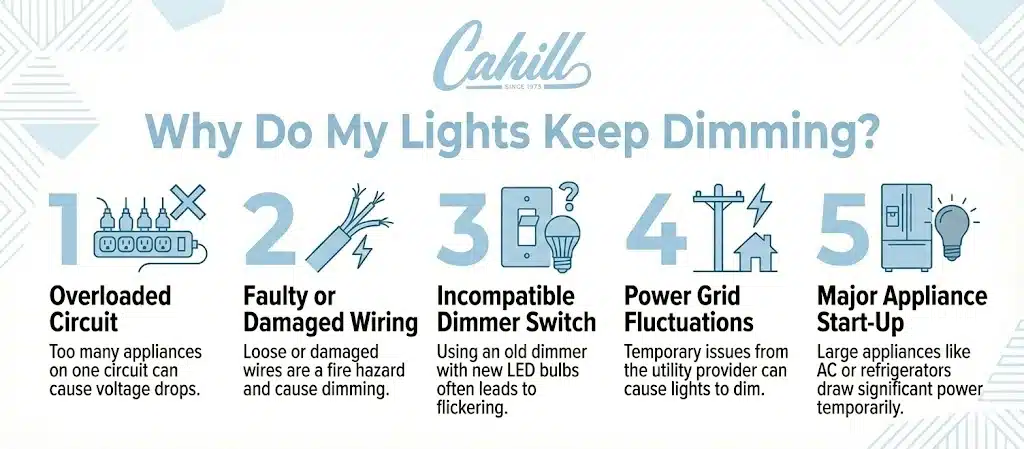
A common reason for dimming with newer lights is that the bulbs are not compatible with the dimmer switches in your home. Many people find out the hard way that CFL bulbs do not work with most traditional dimmer setups, and some LED bulbs require a specific type of dimmer.
Signs of incompatibility can include:
- Lights that dim too much or not enough when you use the dimmer
- Flickering or buzzing when the dimmer is on
- Lights that will not turn fully on or off
Replacing these bulbs with ones that are clearly labeled as dimmable and compatible with your type of switch can usually solve the issue. If you are unsure which products work best, a professional electrician can recommend the right combination of dimmer and bulb for your fixtures.
Circuit Overload and Undersized Electrical Panels
If you notice that your lights seem to dim when a major appliance turns on, you may have an overloaded circuit. Many people experience this when they start their HVAC system, dryer, or microwave. This issue is more common in older homes that were not designed for today’s electrical demands.
Common signs of a circuit overload include:
- Lights dimming or flickering when large appliances start
- Breakers that trip often on the same circuit
- Warm or buzzing outlets or switches
In the short term, you can try moving some devices to other outlets and unplugging items you are not using. However, this is usually a sign that you need a long-term solution. To solve this issue, you will need to call in an electrician. They can rewire your breaker setup, add dedicated circuits for high-demand appliances, or recommend a panel upgrade to better support your modern electricity needs.
Outdated or Damaged Wiring
Another cause of your lights dimming without any interaction is old, outdated, or damaged wiring. Older wiring was not designed to handle current electrical loads and can struggle when many devices are running at once. Damage from moisture, pests, or poor previous repairs can also cause voltage drops and inconsistent power.
You might notice:
- Lights dimming in one area when something is plugged in elsewhere
- Flickering combined with burning smells or discolored outlets
- Lights dimming in certain rooms more than others
These problems should never be ignored. You will need to call a licensed electrician to assess the issue and determine what part of your home’s electrical system needs rewiring to meet your current needs.
Compromised or Open Neutral Wire
If your lights sometimes get brighter and then dim, or lights in different parts of the home behave very differently, you could have a problem with your neutral wire. The neutral helps keep voltage balanced throughout your electrical system. When it is loose, corroded, or broken, some circuits may receive too much or too little voltage.
A compromised or open neutral can:
- Cause lights to brighten and dim unexpectedly
- Damage sensitive electronics and appliances
- Create a serious fire and shock hazard
This is not a DIY repair. If you suspect an issue with your neutral, contact a licensed electrician immediately. They can test your system, locate the problem connection, and ensure that your panel and wiring are safe.
Power Grid Issues and Brownouts
Another issue that may be responsible for your lights dimming is a problem with your power supply outside the home. When there is a problem with your electricity company or an unusually high demand on the grid, your power supply may drop temporarily. This can cause your lights to dim, a situation sometimes described as a brownout.
Brownouts often:
- Occur during extreme weather or peak usage times
- Impact many homes in your neighborhood at once
- Resolve on their own once the grid stabilizes
During a brownout, it is a good idea to reduce the load on your system by turning off non-essential appliances and electronics. Using high-quality surge protection and considering a standby generator can also help protect your home from repeated power quality issues. In most cases, this type of dimming is short-lived and power will return to normal once the grid issue is resolved.
Are Dimming Lights Dangerous?
Dimming lights are not always an emergency, but they should never be ignored. Some situations are clear warning signs that you should call an electrician right away, including:
- Lights dimming across the entire home
- Frequent breaker trips or buzzing from the panel
- Burning or hot plastic smells near outlets, switches, or fixtures
- Outlets, switches, or the electrical panel feeling warm to the touch
Because electrical issues can turn into fires or shock hazards, it is always safer to have a professional inspect persistent or unexplained dimming.
How Cahill Troubleshoots Dimming Lights
When you call Cahill Heating, Cooling, Electric, Plumbing & Sewer about dimming lights, a licensed electrician will:
- Discuss what you are noticing and when the dimming happens.
- Inspect the affected fixtures, switches, and outlets.
- Check your electrical panel, breakers, and service capacity.
- Test for loose connections, damaged wiring, or neutral issues.
- Explain the findings in clear language and recommend the best repair or upgrade.
Whether you need a simple fixture repair, updated circuits, or a larger panel upgrade, our team will help you choose a solution that keeps your home safe and your lights stable.
Frequently Asked Questions
Why do my lights dim when I turn on my air conditioner or microwave?
Large appliances draw a lot of power when they start up. If they share a circuit with your lighting, that temporary surge can cause a brief voltage drop and dimming. This is common on older circuits that are already close to their limit. An electrician can add dedicated circuits or upgrade your panel to better support these loads.
Is it dangerous if my lights keep dimming and brightening?
Yes, repeated dimming and brightening can indicate loose connections, damaged wiring, or a neutral problem. All of these can be safety hazards. If you notice this happening often, especially in multiple rooms, schedule an electrical inspection as soon as possible.
Why do the lights dim in only one room?
If dimming is limited to one room or one fixture, the cause may be a loose bulb, an aging fixture, or wiring damage in that part of the home. A licensed electrician can test the affected circuit and correct any unsafe conditions.
What is a brownout?
A brownout is a temporary drop in voltage from the power company. Unlike a full outage, your lights stay on but appear dimmer than normal. Brownouts are usually caused by high demand or equipment issues on the grid and are outside your home’s wiring.
When should I call an electrician about dimming lights?
Call an electrician if dimming happens frequently, affects several rooms, is combined with burning smells or buzzing, or continues after you replace bulbs and reduce the number of devices on the circuit. It is always better to be safe with electrical issues.
Call Us Today
If you are having trouble with your household lights dimming, then it is time to contact us. Let our knowledgeable electricians help you find the cause of your lighting issues. We can fix your electricity system so that your lights stay bright and reliable in the future.